Happy Holidays! Luna Labs will be closed Dec. 24 & 25 and January 1.
powered by bulletin

This information was recently presented at the University of Virginia by Yang Xu, PhD, Head of NanoPharma at Luna Labs. Dr. Xu was hosted by our collaborator, Jiang He, PhD, Associate Professor in the Departments of Radiology and Medical Imaging, to present, “NanoVac Enabled Delivery of Diverse Payloads Across Biological Barriers.”

One of the big challenges in medicine today is delivering therapeutic payloads, such as cancer treatments and vaccines, exactly where they need to go in the body in a way that triggers the right response. Luna Labs has developed NanoVac™ to tackle this problem. NanoVac is a drug delivery platform that uses short carbon nanotubes (SCNTs) to transport therapeutics more effectively by mimicking the structure of viruses themselves.

How NanoVac Works: Mimicking Virus Structure

A key innovation behind NanoVac is its ability to mimic virus structure. Viruses are efficient at penetrating biological barriers and delivering genetic material into cells. By replicating this structure at the nanoscale, NanoVac leverages the same mechanisms that viruses use to navigate the body’s defense systems. This approach allows NanoVac to:

  • Cross biological barriers that typically block therapeutic delivery
  • Ensure efficient uptake by target cells
  • Trigger appropriate immune responses
  • Protect therapeutic payloads from degradation during storage
  • Deliver multiple therapeutic agents simultaneously
  • Reduce the dose needed and minimize toxicity

The technology can be administered through different routes, from injections to intranasal delivery. It has the potential to increase biocompatibility and patient tolerance while simplifying production and potentially reducing costs.

NanoVac's SCNTs are precisely cut, separated, and purified to obtain a narrow size distribution and ensure biocompatibility. Due to their high surface area, SCNTs can be modified with multiple copies of a payload or even different payloads, making them versatile carriers for various therapeutics.

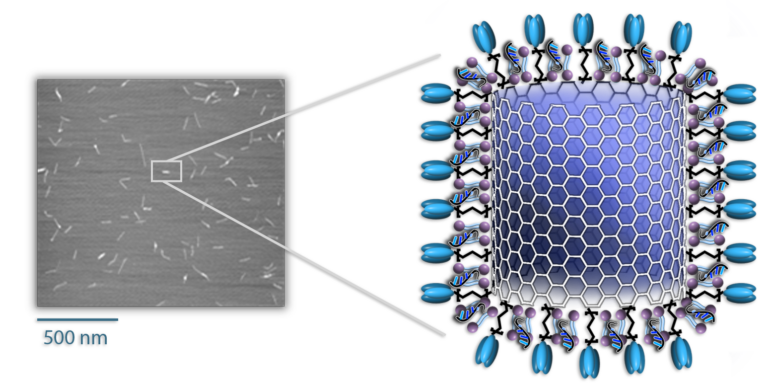
Graphic depiction of NanoVac delivery vehicle

An electron microscope is required to see the NanoVac delivery vehicle, with each rod measuring 100-200 nm (less than 0.3% the width of a human hair). In the schematic, therapeutic nucleic acids and proteins are shown loaded onto the surface of the SCNTs, taking advantage of the nanotubes’ high surface area to carry multiple copies of the therapeutic payload directly to target cells.

Promising Preclinical Results

In preclinical studies with humanized mice (mice with human-like immune systems), NanoVac demonstrated a 33% protection rate against HIV-1 infection. That’s a significant achievement given that no licensed HIV vaccine currently exists.

Preclinical studies show NanoVac can:

  • Enhance uptake by immune cells so they can process the treatment efficiently
  • Maintain mRNA stability for over 90 days under refrigeration
  • Be safely distributed throughout the body with a favorable safety profile

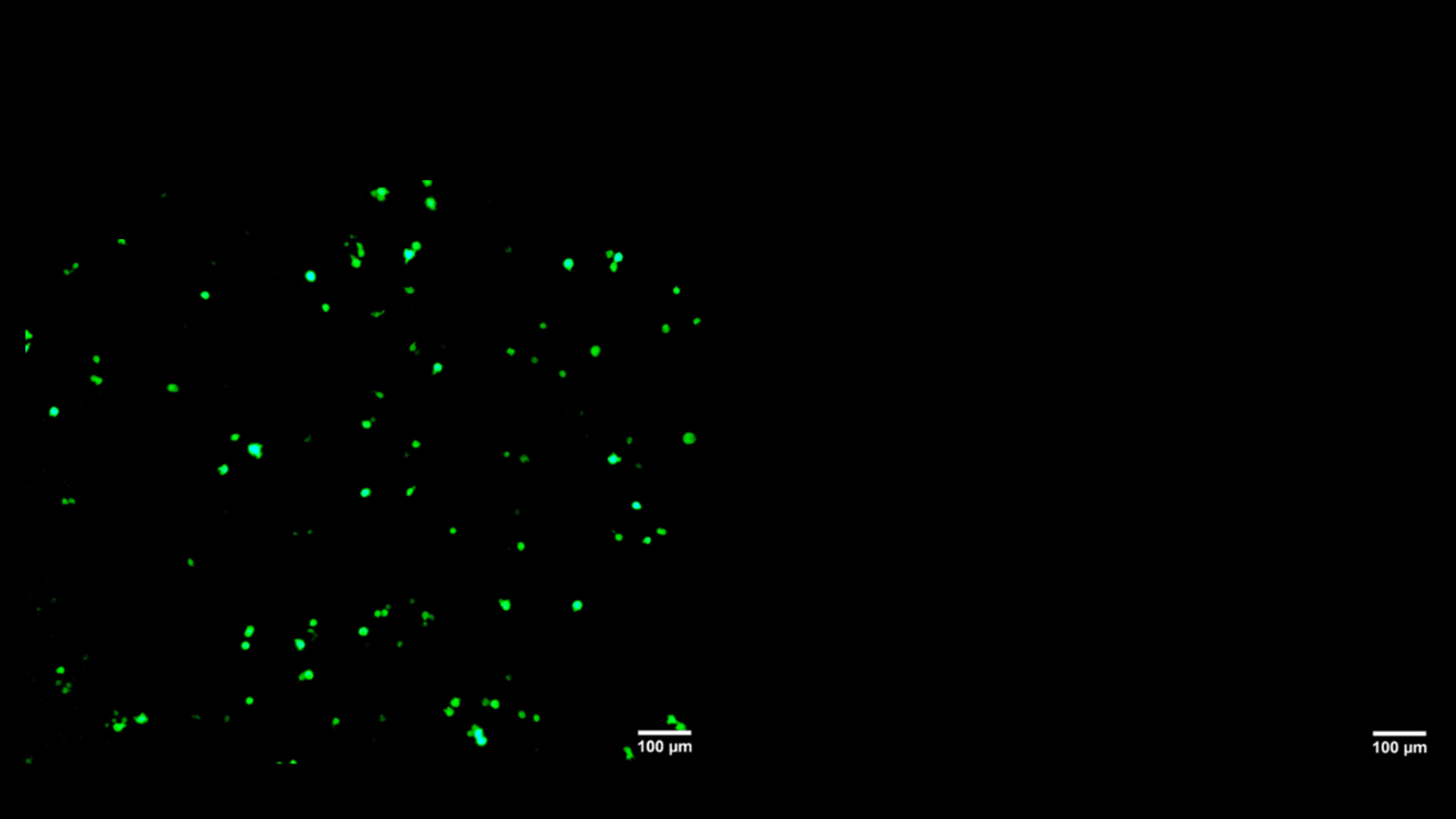
After storage, mRNA delivered with NanoVac (left) was effectively transfected while mRNA delivered using standard lipid nanoparticles (LNPs) (right) was not. 

Luna Labs has already begun cGMP manufacturing with partners at nanoComposix and is advancing through preclinical studies focused on dosing, safety, and biodistribution.

While the system is being tested out on the HIV model, NanoVac’s potential extends beyond a single disease. The same platform that can deliver HIV vaccine components could change the game for:

  • Neurological diseases: Delivering therapeutic molecules across the blood-brain barrier for conditions like Alzheimer’s
  • Cancer: Delivering targeted therapies directly to tumors while reducing side effects, or delivering personalized cancer vaccines
  • Respiratory diseases: Creating more effective vaccines for influenza, RSV, and other respiratory pathogens

As we look toward the future of more personalized, more targeted, and more effective healthcare, delivery platforms like NanoVac represent the innovations that will make next-generation therapies possible. The work we're doing today is laying the groundwork for breakthrough treatments across multiple disease areas tomorrow."

The nanopharmaceutical market is growing rapidly, with mRNA vaccines, siRNA therapies, and targeted drug delivery representing a multi-billion-dollar opportunity. NanoVac positions Luna Labs at the intersection of these emerging fields, offering a versatile platform that can adapt to multiple therapeutic applications.

References

1) Biomolecules. 2023 Jul 7;13(7):1088. doi: 10.3390/biom13071088.

2) Part Part Syst Charact. 2022 May;39(5):2200011. doi: 10.1002/ppsc.202200011.

Acknowledgements

This work is possible with funding support from the National Institute of Mental Health (NIMH), the National Institute of Allergy and Infectious Diseases (NIAID), and the US Army Medical Research Acquisition Activity (USAMRAA) and in collaboration with Jiang He, PhD, Radiology and Medical Imaging at the University of Virginia, Moriya Tsuji, PhD, MD, Aaron Diamond Aids Research Center at Columbia University, and Xiangpeng Kong, PhD, Molecular Pharmacology at NYU. Dr. Matthew Bernard and Dr. Krieger-Burke Teresa at Michigan State University.

Contact

Yang Xu, PhD
NanoPharma Lead, Luna Labs
yang.xu@lunalabs.us

Learn more about NanoVac and other technologies in Luna Labs’ pipeline.

Categories


Newsletter Signup

Get the latest news from Luna Labs' biotech, materials, systems, and medical simulation teams.